


Dental Crowns in Brooklyn
Custom crowns that rebuild a cracked, worn or heavily filled tooth to its full shape and strength.
Restorative Dentistry
Rebuild a Damaged Tooth
A dental crown is a custom cap that covers a damaged tooth and restores its shape, size and strength. If you have been searching for dental crowns Brooklyn, you most likely have a tooth that is cracked, worn down, heavily filled, or tender after a root canal, and a filling is no longer enough to hold it together. A crown wraps the whole tooth so you can bite and chew on it again without worrying it will split.
At Dental Care of Brooklyn, Dr. Tatiana Cojocaru and our team fit crowns using a digital scan instead of a tray of putty, then work with a dental lab to build a crown that matches your natural teeth. Most crowns take two visits, and you leave the first one with the tooth protected and the cost in writing.
Do You Need One?
When You Need a Dental Crown
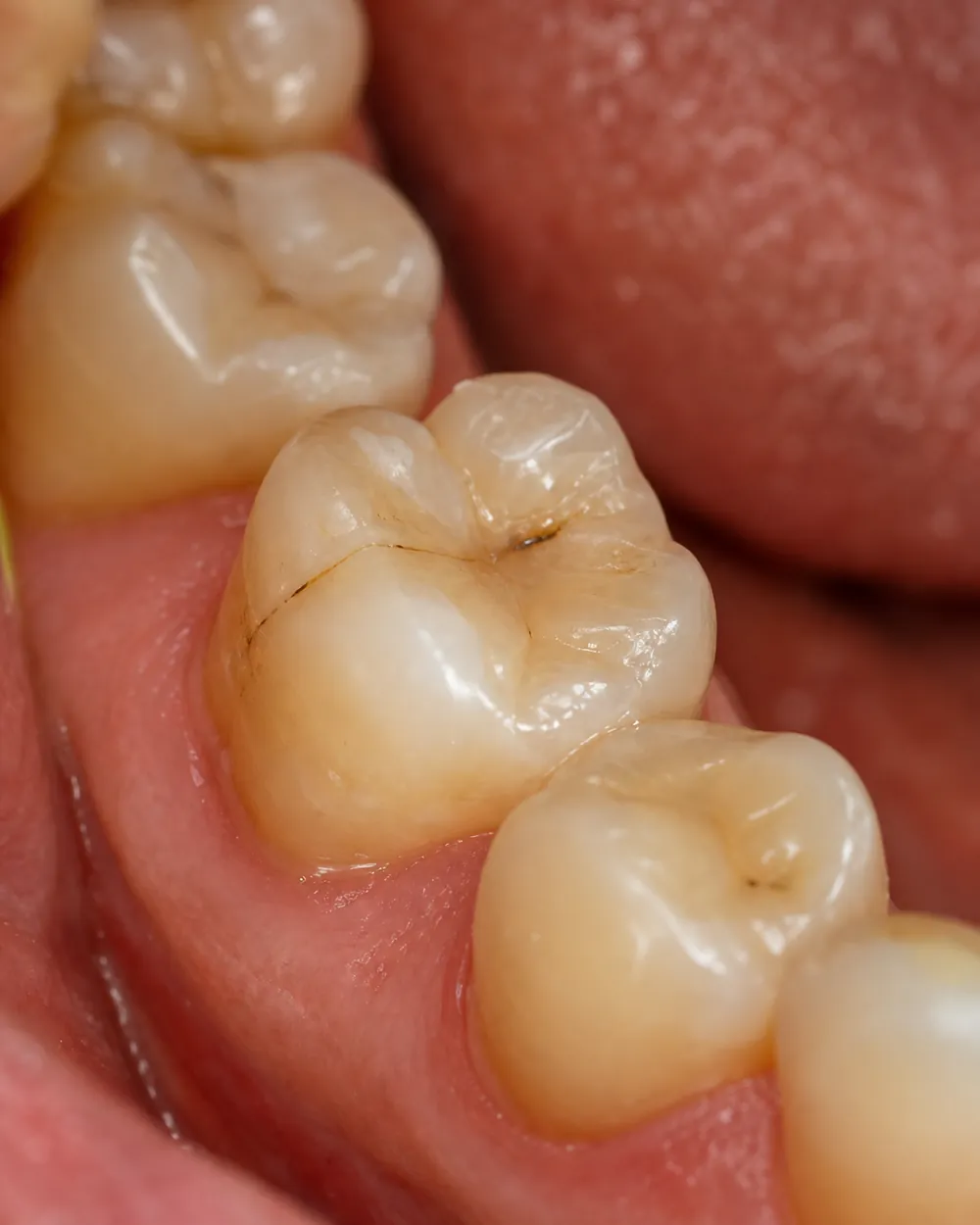
A filling replaces a small part of a tooth. A crown is for when too much of the tooth is gone or too weak to trust with a filling. We recommend a crown when:
- A tooth is cracked, broken or worn down from grinding
- A cavity is too large for a filling to hold
- An old, big filling is failing and the tooth around it is thin
- A tooth has had root canal therapy and needs protection from fracture
- A dental implant needs a natural-looking tooth on top
- A discolored or misshapen tooth needs a full-coverage cosmetic fix
It helps to know how a crown differs from the alternatives. A filling rebuilds a small cavity inside the tooth. When there is more damage than a filling can hold but the tooth is still mostly sound, an inlay or onlay restores it while saving more of the natural tooth than a crown does. Porcelain veneers cover only the front surface of a tooth for looks. A crown wraps the entire tooth, top and sides, which is why it is the choice when a tooth is structurally weak rather than just discolored. We use the least invasive option that will actually last, and we will not crown a tooth a filling could save. When a tooth is too far gone, we talk you through extraction and how to replace it instead.
Materials
Types of Dental Crowns Brooklyn Patients Choose
Crowns are made from different materials, and the right one depends on which tooth it covers and how hard you bite there. Your dentist walks you through the trade-offs:
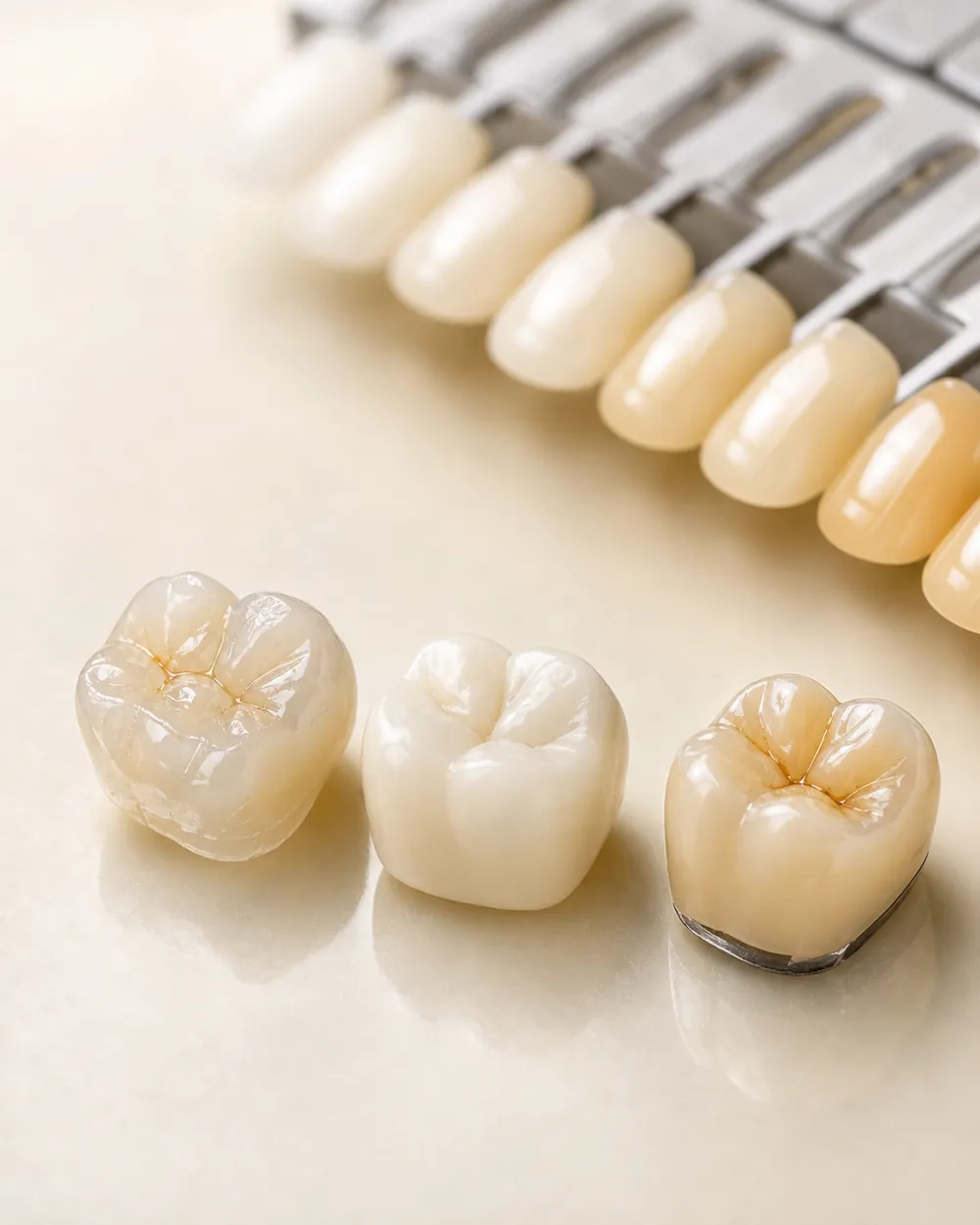
- Zirconia is the strongest option, close to indestructible, and still tooth-colored. It is the usual choice for back molars that take heavy chewing force.
- All-porcelain and ceramic crowns look the most like natural enamel, with a lifelike translucency, which makes them ideal for front teeth that show.
- Porcelain fused to metal is strong and less expensive, but a thin metal line can show at the gum, so it suits out-of-sight teeth better than your smile line.
There are in-between options too. Porcelain fused to zirconia pairs the strength of zirconia with a lifelike porcelain surface, and gold, though rarely requested now, is still one of the gentlest materials on the teeth it bites against. If you have a metal allergy, tell us so we can steer you to an all-ceramic crown. For a front tooth the goal is a crown nobody can spot, so shade and translucency matter most. For a molar, strength wins. We match the material to the tooth rather than using one crown for everything, and explain why.
Cracked or Broken
Broken Tooth Repair Brooklyn
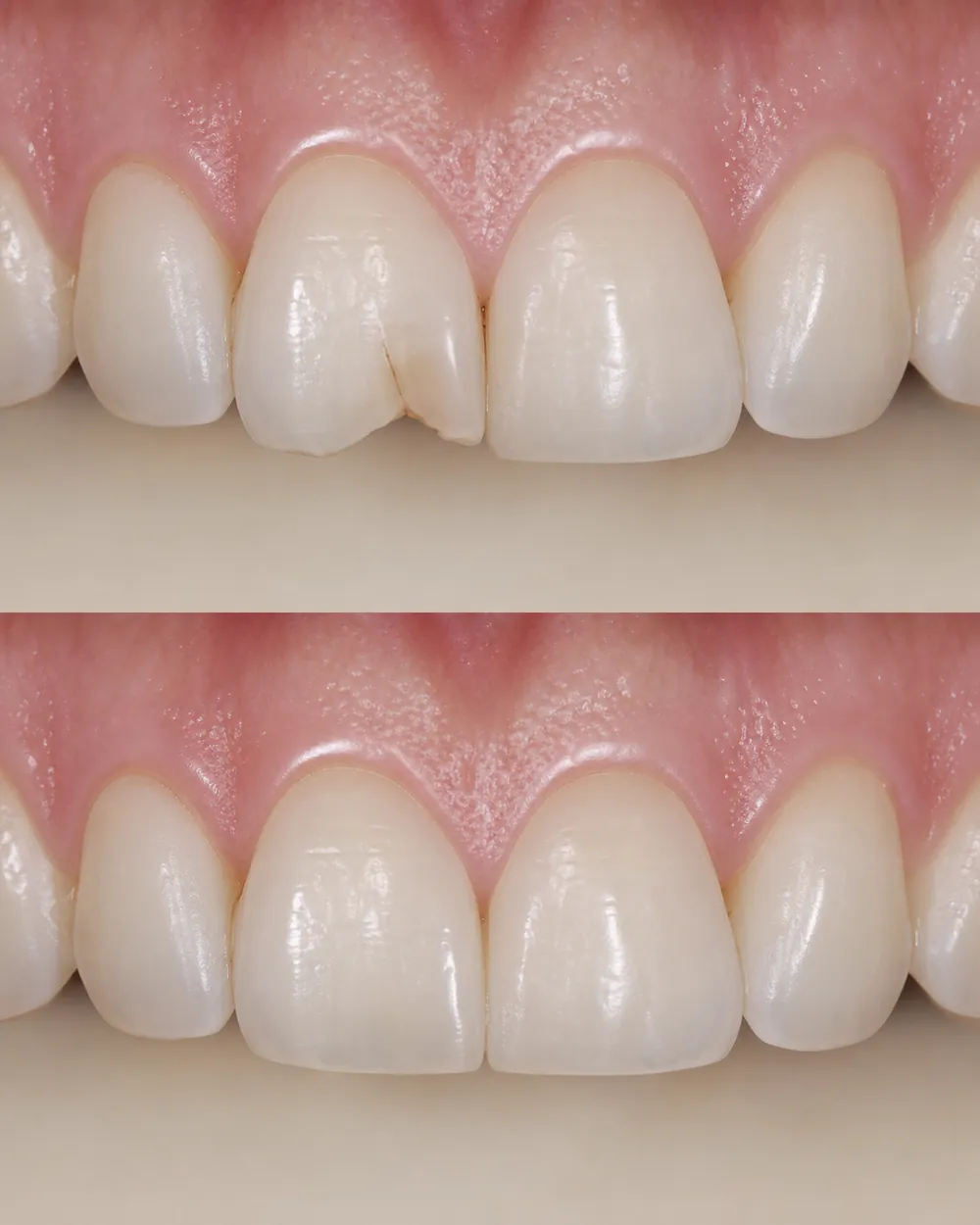
A crown is the standard repair for a tooth that has cracked or broken. Once a cusp snaps off or a crack runs deep, a filling cannot rebuild it, but a crown caps the whole tooth and holds it together so it works and looks normal again. It also seals the tooth against decay getting into the crack.
If you have broken a tooth and it hurts, or a piece has come away, treat it as urgent. See our emergency dental care page and call the office the same day. Fast attention keeps a repairable break from turning into a lost tooth or an infection that needs root canal treatment. In the meantime, rinse with warm water, keep any broken piece, and use a cold compress outside the cheek if it is swollen.
Replacing a Missing Tooth
Crowns and Bridges Brooklyn
When you are missing a tooth, two crowns can carry a bridge. A dental bridge uses crowns on the healthy teeth on either side of the gap to anchor a replacement tooth in the middle, closing the space so you can chew evenly and your other teeth do not drift. It is a fixed restoration, so it stays in your mouth like your own teeth rather than coming out to clean.
A bridge is one way to replace a missing tooth. A dental implant is another, and it does not involve crowning the neighboring teeth. We lay out both, with the pros, the cost and the timeline, so you can choose the one that fits your mouth and your budget rather than being steered toward one option.
What to Expect
The Dental Crown Process
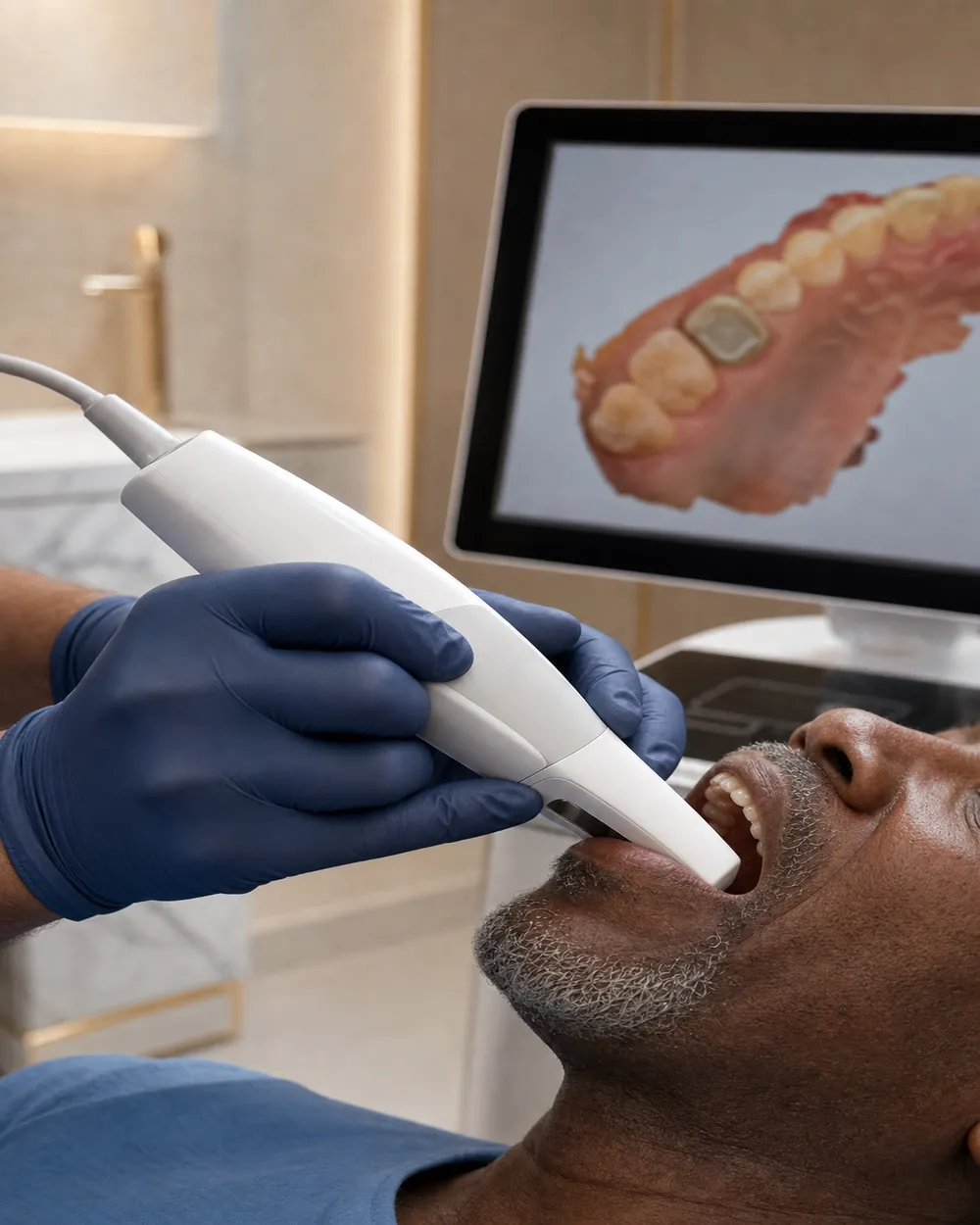
First visit: shaping and scanning. Your dentist numbs the tooth, removes any decay or old filling, and shapes the tooth so the crown fits over it, then takes a digital scan of your teeth, which replaces the old putty impression, and sends it to the dental lab that builds your crown.
A temporary crown. You leave the first visit with a temporary crown protecting the tooth, so you can eat and smile normally while the permanent one is made. This stage usually lasts one to two weeks. If your temporary comes loose before the second visit, keep it and call the office. It is a quick re-cement, and leaving the prepared tooth uncovered lets it shift or turn sensitive, which can make the final crown harder to seat.
Second visit: fitting and bonding. When your crown is ready, we check the fit, shade and bite, adjust anything that needs it, and bond the crown in place. You walk out with the tooth fully restored.
We craft crowns in a lab rather than milling them in the chair, which adds the short wait for a temporary but lets us fine-tune the fit and color. If you would rather not have a tooth left exposed between visits, the temporary handles that.
Cost and Insurance
Dental Crowns Brooklyn: Cost and Insurance
In Brooklyn, a dental crown generally runs about $800 to $2,500 per tooth. Where your crown falls in that range depends on the material and how much rebuilding the tooth needs, with strong zirconia and lifelike all-porcelain crowns costing more than porcelain-fused-to-metal. You get an exact, written quote at your visit before any work starts.
Unlike cosmetic veneers, crowns are usually considered medically necessary, so dental insurance often covers part of the cost, commonly around half after your deductible. We file with most plans and tell you your expected share up front. Ask us to check your benefits before you decide, so the number you are weighing is your real out-of-pocket cost rather than a list price. For the rest, ask about CareCredit and payment plans that spread it over monthly payments, and new patients can start with our $99 exam, cleaning and full-mouth X-rays so the tooth gets checked first.
Longevity
How Long Crowns Last and How to Care for Them
A well-made crown lasts about 10 to 15 years, and often longer. The crown itself will not decay, but the natural tooth underneath still can, so the same habits protect both: brush twice a day, floss around the crown, and keep your regular cleanings and exams so any problem at the edge is caught early.
For the first day or two a new crown can feel slightly different when you bite. If it still feels high or catches after that, call us for a quick adjustment rather than living with it, since an uneven bite wears the crown and the teeth it meets. Do not chew ice or open packaging with a crowned tooth, and if you grind at night, a custom night guard takes the strain off the crown and your other teeth. The American Dental Association has a plain-language overview of crowns if you want to read more before your visit.

Next Step
See If a Crown Is Right for Your Tooth
The only way to know whether a tooth needs a crown, a filling or something else is to look at it. Dr. Cojocaru cares for patients across Sheepshead Bay and southern Brooklyn, and she will show you what she sees on the scan and give you an honest recommendation, not a sales pitch.
Good to Know
Dental Crown FAQs
Does insurance cover dental crowns?
Often, yes. Unlike cosmetic veneers, crowns are usually considered medically necessary, so most dental plans cover a share, commonly around half after your deductible. We file with most plans and tell you your expected out-of-pocket cost before treatment begins.
Is getting a crown a painful procedure?
It should not be. The tooth is numbed with a local anesthetic, so you should not feel pain during the visit. Some people notice mild sensitivity for a few days after each appointment, which settles on its own.
How long do crowns last?
About 10 to 15 years with good care, and often longer. The crown itself will not decay, but the tooth underneath can, so daily brushing and flossing plus regular cleanings protect it. A night guard helps if you grind your teeth.
How long does it take to get a dental crown?
Most crowns take two visits over about one to two weeks. At the first, the tooth is shaped and digitally scanned and you leave with a temporary crown. At the second, the permanent crown is fitted and bonded. We craft crowns in a lab rather than milling them in the chair.
Is $2,000 a lot for a dental crown?
It is within the normal range. In Brooklyn a crown generally runs about $800 to $2,500 per tooth, depending on the material and how much the tooth needs rebuilding, with zirconia and all-porcelain at the higher end. You get an exact written quote before any work starts.
What if I need a crown but cannot afford it?
Tell us. Crowns are often partly covered by insurance, and for the rest we offer CareCredit and payment plans that spread the cost over monthly payments. New patients can also start with our $99 exam, cleaning and X-rays. Putting off a needed crown usually costs more if the tooth breaks further.
Patient Reviews
What Patients Say
Restore Your Tooth With a Custom Crown
Book a consultation at Dental Care of Brooklyn, or call the office. New patients start at $99.