


Root Canal Treatment in Brooklyn
A gentle, modern way to save an infected tooth and end the pain, not the ordeal you have heard about.
Save the Tooth
Relief, and Your Own Tooth Kept
A root canal treats an infection deep inside a tooth, in the soft pulp where the nerve lives. When decay, a crack or an injury lets bacteria reach that pulp, it becomes inflamed or infected, which is what causes the throbbing, the sensitivity and sometimes the swelling. A root canal Brooklyn patients often dread is actually the treatment that ends that pain: your dentist removes the infected tissue, cleans and seals the inside of the tooth, and you keep your natural tooth instead of losing it.
The reputation is worse than the reality. With modern anesthetic, the treatment is no more uncomfortable than a filling, and it relieves pain rather than causing it. At Dental Care of Brooklyn, Dr. Tatiana Cojocaru handles most root canals right here in the office, and for anxious patients, nitrous oxide keeps the visit calm.
Do You Need One?
Signs You Might Need a Root Canal
A tooth that needs a root canal usually lets you know, though not always. Common warning signs are:
- A lingering toothache, or pain that wakes you at night
- Sharp pain when you bite or put pressure on the tooth
- Sensitivity to hot or cold that lasts after the food or drink is gone
- Swelling or tenderness in the nearby gum, or a small pimple on the gum
- A tooth that has darkened or changed color
- A deep cavity, a crack, or a filling that has failed
Sometimes an infected tooth causes no pain at all and only shows up on an X-ray at your exam, which is one more reason regular check-ups matter. If you have any of these signs, call us. Caught early, the tooth is easier to save. If the pain is severe or the face is swelling, treat it as an emergency and call the same day.

What to Expect
Root Canal Brooklyn: Does It Really Hurt?
No. The single most common question, and the honest answer is that thanks to local anesthetic the tooth is fully numb, so you feel pressure but not pain, the same as a filling. What actually hurts is the infection beforehand, and the root canal is what takes that away.
Here is the treatment, start to finish. Your dentist numbs the tooth and places a thin protective sheet around it. A small opening is made, the infected pulp is removed, and the inside of the tooth and its narrow canals are cleaned and disinfected. The space is then sealed with a rubber-like material, and a temporary filling protects the tooth until the permanent restoration goes on.
A course of root canal treatment Brooklyn patients have here usually takes one or two visits. Dr. Cojocaru works gently and tells you what is happening at each step, and afterward the tooth may feel tender for a few days, which over-the-counter pain relief handles easily. Very complex molars, retreatments or calcified canals are referred to a trusted endodontist, because the right specialist matters more than doing everything in one place.
Recovery is usually easier than people expect. Most head straight back to work or their day, and the tooth simply feels a little tender for a few days as it settles, which an over-the-counter pain reliever like ibuprofen handles well. For the first day or two, chew on the other side and favor softer foods, especially while a temporary filling is protecting the tooth, since a temporary is not built for heavy biting.
Keep brushing and flossing gently around the area. Call us if the soreness grows instead of fading, if swelling appears, or if the temporary comes loose, because each of those is quick to fix when caught early. Every root canal Brooklyn patients have done here comes with clear written aftercare and a direct line to the office, so you are never left wondering whether something is normal.
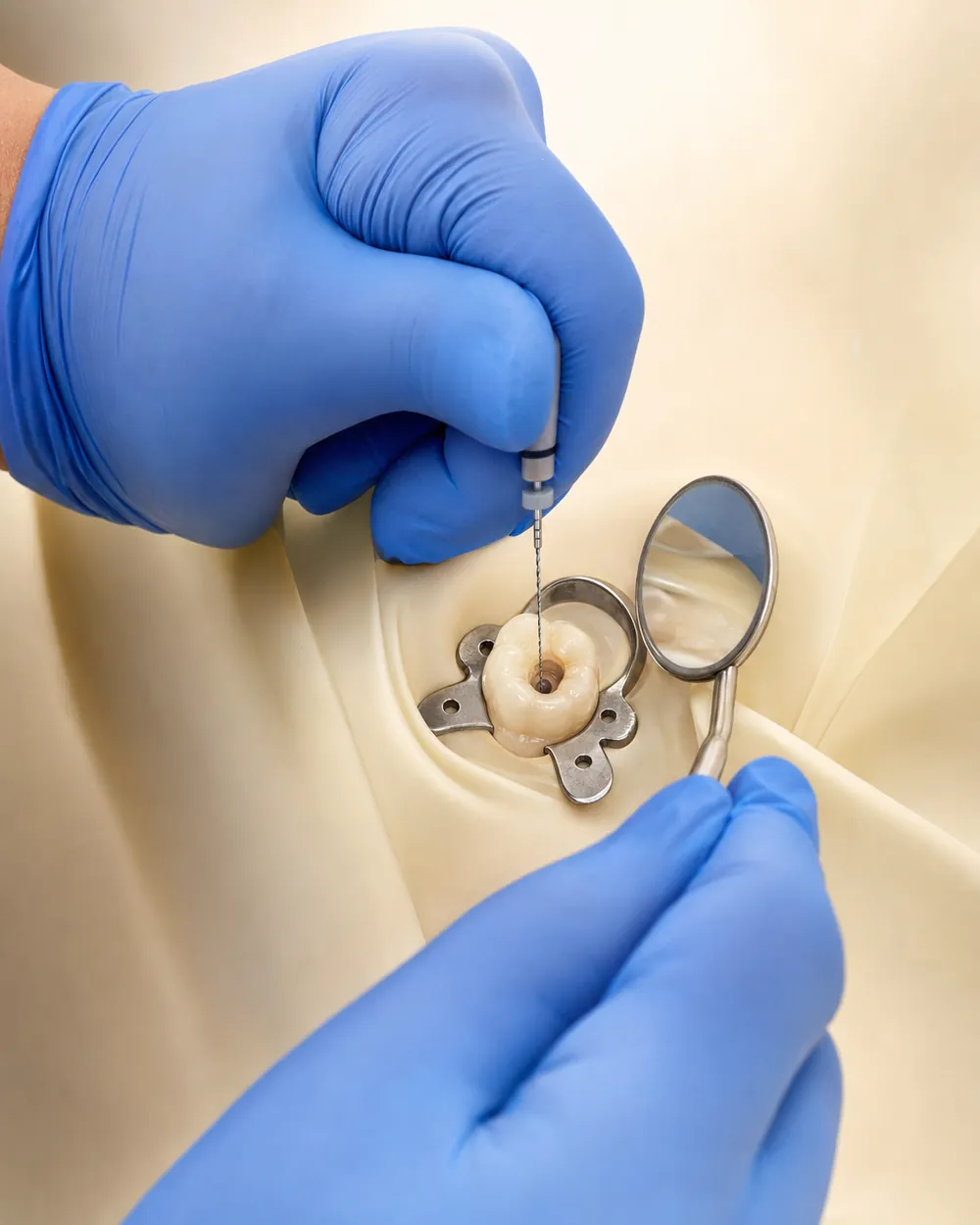
The Next Step
The Crown After a Root Canal
A tooth that has had a root canal is saved, but it is also more brittle, because it no longer has its living pulp and often started with a large cavity or crack. That is why most back teeth need a dental crown afterward: the crown caps the whole tooth and protects it from fracturing, so it can go back to normal chewing for years.
Front teeth with smaller openings can sometimes be restored with a filling instead. We will tell you which your tooth needs at the start, so the full plan and cost are clear before we begin, not a surprise afterward. Planning the crown from the outset also means the tooth is protected without delay once the root canal heals.
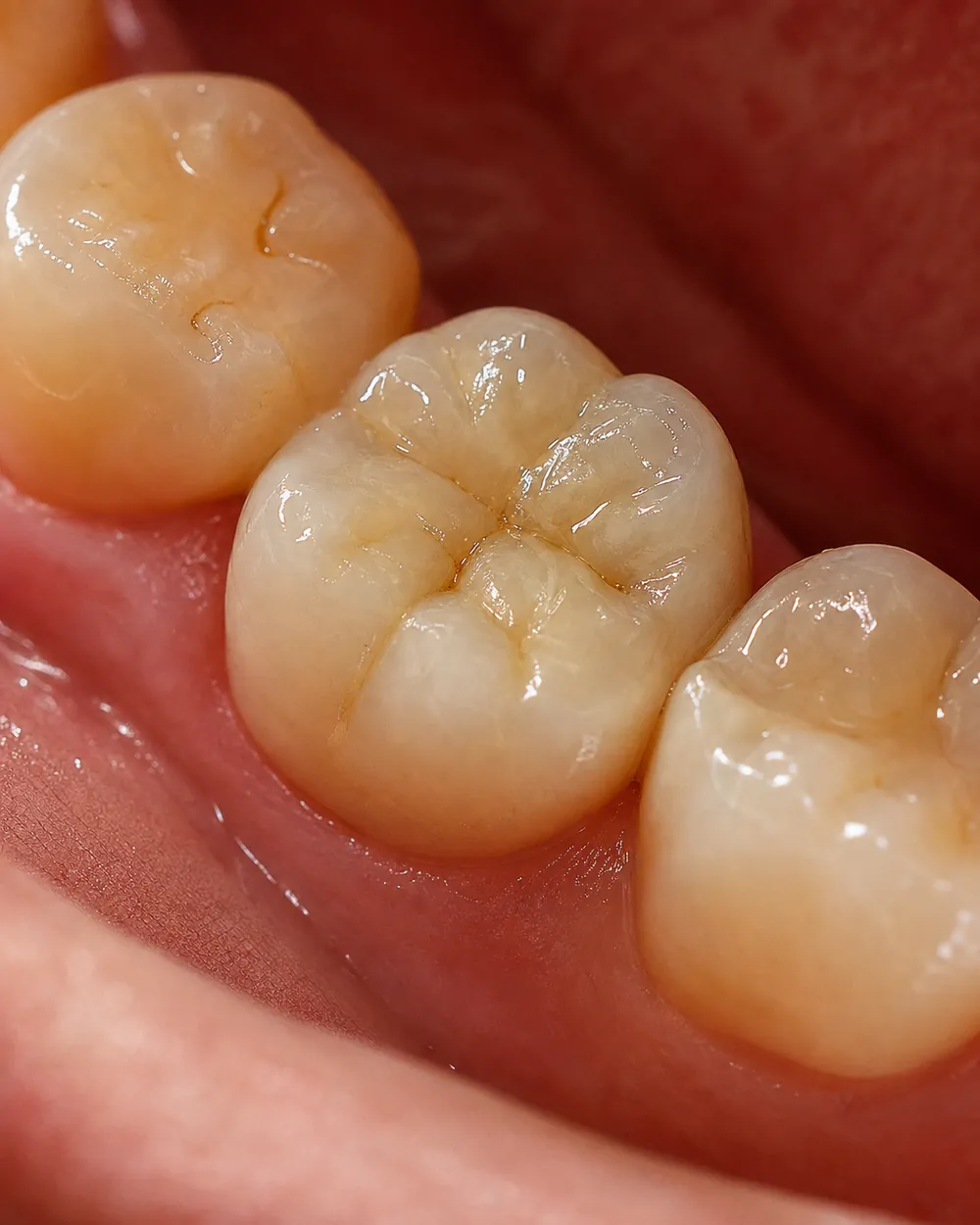
Save or Pull?
Root Canal or Extraction?
When a tooth is infected, you generally have two choices: save it with a root canal, or remove it. Keeping your own tooth is almost always the better option. Nothing works quite like a natural tooth, a root canal is usually less expensive than removing the tooth and replacing it, and it avoids the gap that lets other teeth drift.
Sometimes a tooth is too broken or the infection too advanced to save, and then a gentle extraction followed by a dental implant is the honest recommendation. We will tell you straight which path gives you the best long-term result, rather than pushing one over the other. The American Dental Association has a plain-language overview of root canals if you want to read more.
Either way, you get a straight recommendation from a root canal dentist Brooklyn locals can reach on weeknights and Sundays, not a decision rushed while you are still in the chair. We show you the X-ray, explain what the tooth actually needs, and put the plan and the cost in writing before anything begins, so you can weigh saving the tooth against replacing it with a clear head.
Cost and Insurance
Root Canal Cost in Brooklyn
In Brooklyn, a root canal generally runs about $700 to $1,100 for a front tooth, $800 to $1,300 for a premolar, and $1,000 to $1,800 for a molar, because back teeth have more canals to clean and seal. The crown that usually follows is priced separately. You get an exact, written quote before any treatment starts.
Because a root canal is medically necessary, dental insurance usually covers a good part of it, and we file with most plans and tell you your expected share up front. For the rest, ask about CareCredit and payment plans, and new patients can start with our $99 exam, cleaning and full-mouth X-rays. Saving the tooth now is almost always cheaper than removing and replacing it later.
Good to Know
Root Canal FAQs
How much does a root canal cost in Brooklyn?
Generally about $700 to $1,100 for a front tooth, $800 to $1,300 for a premolar, and $1,000 to $1,800 for a molar, since molars have more canals. The crown that usually follows is separate. Insurance often covers a good part, and you get a written quote first.
What are the first signs of needing a root canal?
A lingering toothache, sharp pain when biting, hot or cold sensitivity that lingers, swelling or a pimple on the gum, or a tooth that has darkened. Some infected teeth cause no pain and show up only on an X-ray, which is why regular exams matter.
Does a root canal hurt?
No. The tooth is fully numbed with local anesthetic, so you feel pressure but not pain, the same as a filling. The infection beforehand is what hurts, and the root canal relieves it. Mild tenderness for a few days afterward is normal and easily managed.
How long does the pain last after a root canal?
Most people have only mild soreness or tenderness when biting, and it fades within a few days to a week as the tooth heals. Over-the-counter pain relief usually handles it. Pain that worsens or returns later should be checked, so call us if that happens.
Do I need a crown after a root canal?
Usually, yes, on back teeth. A treated tooth becomes more brittle, so a crown caps and protects it from fracturing. Some front teeth can be restored with a filling instead. We tell you which your tooth needs at the start so the plan and cost are clear.
Is it better to get a root canal or pull the tooth?
Keeping your natural tooth with a root canal is almost always better. It is usually cheaper than removing and replacing the tooth, and it avoids a gap. When a tooth is too damaged to save, an extraction and implant is the honest alternative, and we will tell you straight.
Patient Reviews
What Patients Say
Tooth Pain? Let’s Save the Tooth
Book a visit at Dental Care of Brooklyn and get out of pain. New patients start at $99.